
Yes.
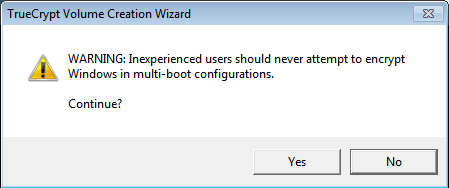
“Yes,” then Next.
First option, then Next.
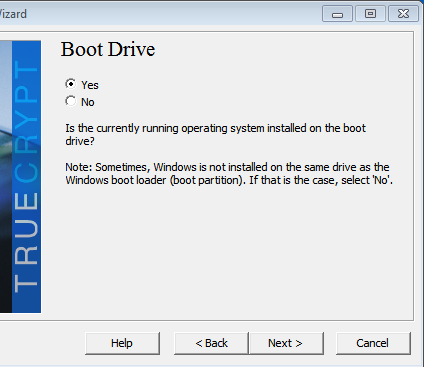
It was, but we rectified this when we restored Windows boot program to the MBR. So, select “No.” Next.
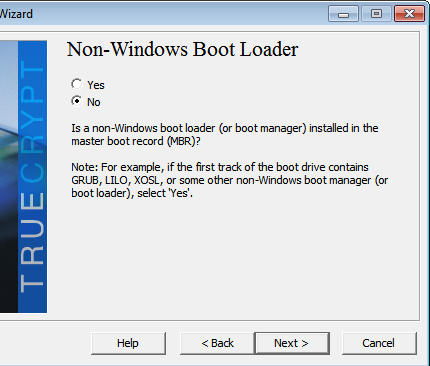
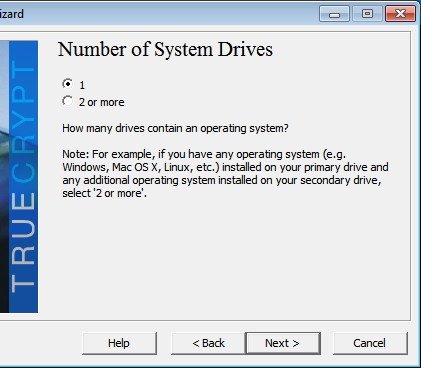
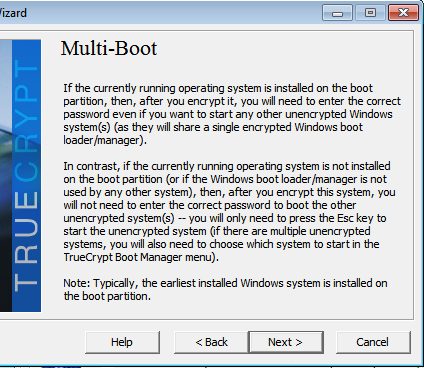
This is fine. What will happen is that after this process is completed, pressing the Esc key at Truecrypt’s boot menu will drop you to Fedora’s boot menu. Because Fedora is also encrypted, being able to bypass Truecrypt’s boot menu to get to it does not compromise the integrity of the system’s physical security Next.
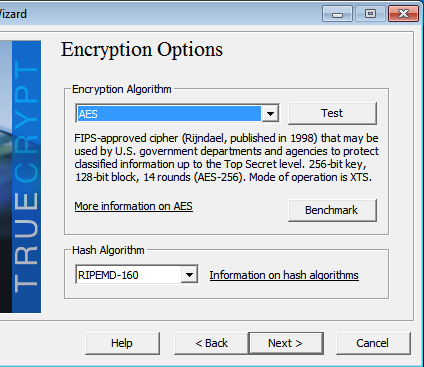
The default encryption algorithm is strong enough, but there are other options, if you feel otherwise. For this test system, I chose the default. Next.
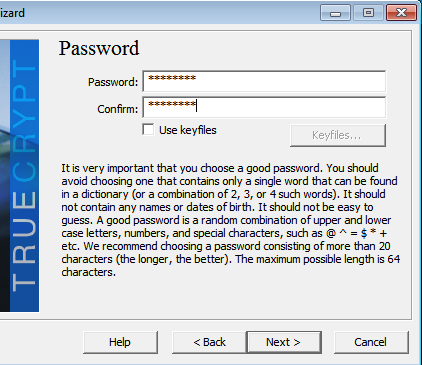
Pick a strong passphrase. Next.
Follow the on-screen instructions, then Next.
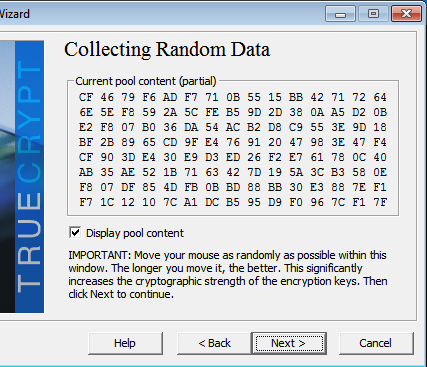
Next.
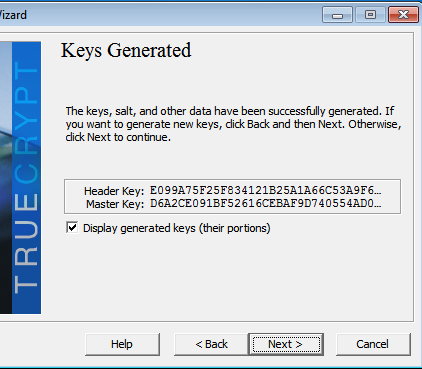
Next.
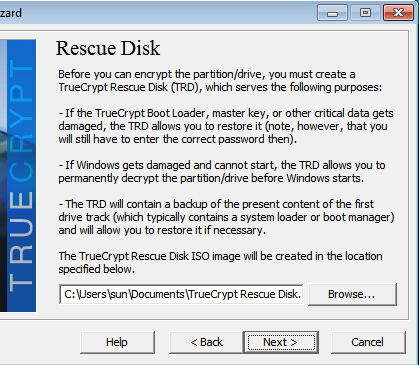
OK.
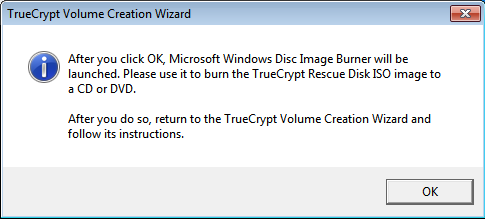
Burn.
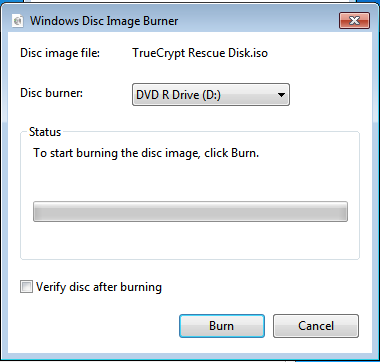
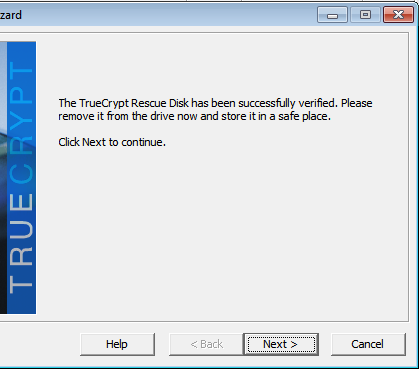
Insert a blank CD-R in the optical drive, then click Next. After you’re done creating the Truecrypt Rescue Disk (TRD), you can transfer it to a USB stick, if you like that better.
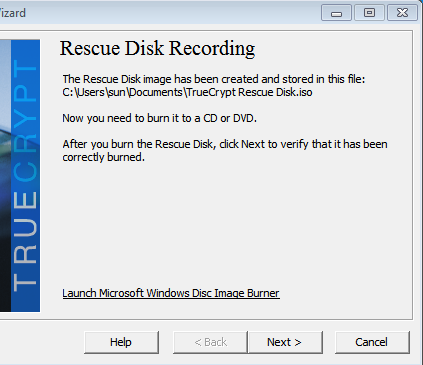
If the TRD is created successfully, click Next.
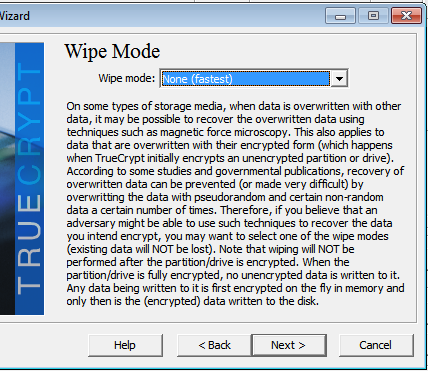
For better encryption, choose a “Wipe Mode” from the dropdown menu. Next.
Test.
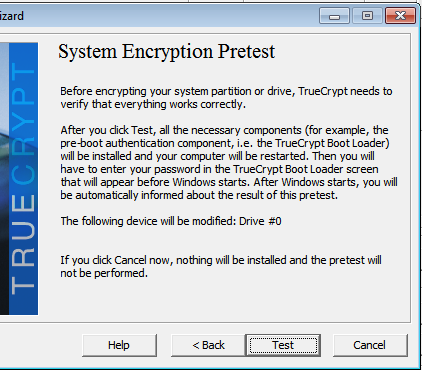
OK.
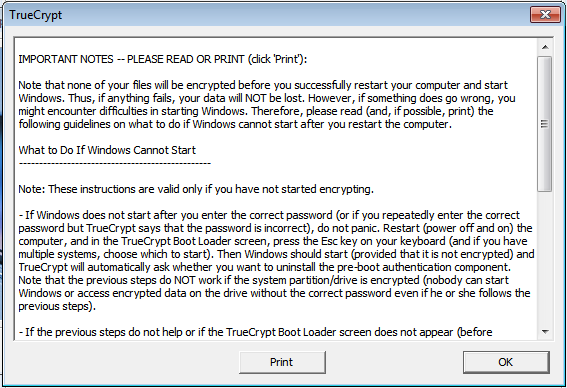
If you’ve followed all the steps as specified, there should be no problem here. Encrypt.
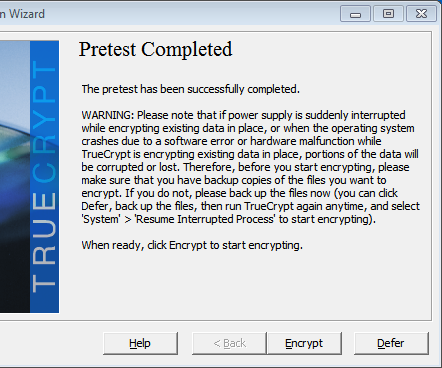
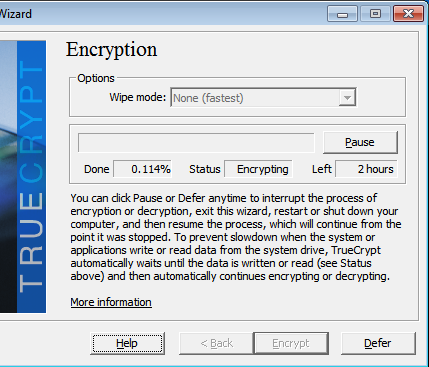
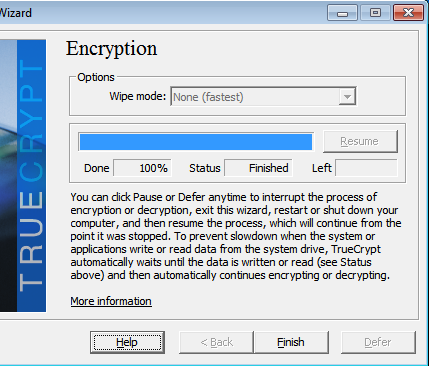
It took two hours for the encryption of my test system to complete. Note that the time it takes is a function of the size of the disk being encrypted, and the wipe mode you chose. The good thing here is that you can still be using the system while Truecrypt is completing the task. Otherwise, take a walk and come back after the estimated time to completion.
Finish.



I am unable to proceed further after “Number of System Drives” menu. After I select the number of drives as ‘1’, TrueCrypt comes with an error mentioning that “True Crypt does not support encrypting a whole drive that contains multiple operating systems” and comes up with two possible solutions of “encrypt single system partition as opposed to encrypt entire system drive” and “move other system to other drive”. Not sure if I have missed anything. Any help is much appreciated.
This tutorial has a flaw.
1. We should select to encrypt System partition only, and not Whole drive.
2. Select “Number of System Drives” 2 or more
A correct tutrial is here:
http://www.7tutorials.com/how-encrypt-your-system-drive-truecrypt-multi-boot-configuration
If you are only encrypting the System Partition, what about the C drive?
And Number of System Drives? 2 or more implies that there are other OSs installed on a second drive, which is not the case in this tutorial.
If you have only one drive (doesn’t matter how many partitions and OS are installed on those partitions), then first try “1”. If it gives error, then select “2 or more”. Simple.
If we encrypt whole drive using Truecrypt then wudn’t it become a double encryption when we run fedora! as fedora is encrypted too
1. How do I make a bootable flash drive of the desktop version of fedora 18 (4.5GB)?
2. I have win7 installed on c drive. On D drive, I’ve my media files. And I can install Fedora on E Drive (100GB). After installing fedora 18 with a DVD, will I see a proper entry of windows7 on the list?
Answer to “2” is yes.
For “1”, use Unetbootin. You can install it on Fedora. And there are better options that run on Windows. See this article and the comments under it.
thanks. Somehow, Unetbootin fails to boot the installer of fedora 18. It shows some error – /dev/root does not exist – and is stuck on it forever. I’ve tried other software in that link you provided, all are for live installation, not the desktop installation. (sorry I don’t know what exactly that is called).
They are all designed to load the ISO image on the USB. Then after you boot from the USB, you can install the OS just like you would from a CD/DVD.
no. it never works with fedora this way.
Excellent article. The only drawback I can think of is losing access to windows partitions from Linux. Is there any workaround.
not true, you can mount the windows partition from linux using truecrypt.
that’s a great tutorial. does it limit the installation of new operating systems?
I currently dual boot windows 7 and Fedora 18. I want both encrypted.
I am also thinking of having a small 3rd OS installed which will have no personal data but will allow easy access to the internet so as to make recovery of a stolen laptop through something like Prey more likely.
Am I correct in thinking that your method wouldn’t allow that?
If you install the 3rd OS on the same HDD as another OS whose partition is encrypted, obviously, the 3rd OS is not affected by the other OS’ encryption scheme. So Prey will work on the 3rd OS.
The trick in your case, with Windows and Fedora on the same HDD, is recovering enough space to install the 3rd OS. It can be done, though. Just resize your home or root logical volume.
If I have Ubuntu 12.04 and Fedora 18 along with Windows 7, does creating auto configured Grub 2 menu for Windows Boot loader using EasyBCD will work ?
Yes. The devil, however, is in the details.