Posts Tagged ‘privacy and licensing’
What we can learn from Jason Chen’s experience
Not too long ago, Jason Chen, a Gizmodo editor, had all the computer related materials in his residence seized by cops acting on a warrant in relation to Apple’s missing iPhone 4G prototype. If you recall, Jason Chen got hold of the pre-release iPhone from a guy who found it in a California bar. So [...]
A Bill of Privacy Rights for Social Network Users
Social network service providers today are in a unique position. They are intermediaries and hosts to our communications, conversations and connections with loved ones, family, friends and colleagues. They have access to extremely sensitive information, including data gathered over time and from many different individuals. Here at EFF, we’ve been thinking a lot recently about [...]
EFF Seeks Attorneys to Help Alleged Movie Downloaders
Are you an attorney licensed to practice law in the United States? If you are, EFF needs your help to fight spam-igation. The U.S. Copyright Group has quietly targeted 50,000 Bit Torrent users for legal action in federal court in Washington DC. The defendants, all Does, are accused of having downloaded independent films such as [...]
Who Controls Identity on the Web?
The race to own your virtual identity is on. In announcements made just days apart at the end of April, Facebook and the Mozilla Foundation launched parallel efforts to extend the way users are identified and connected on the Web. The two approaches are fundamentally different. Facebook’s Open Graph Protocol uses the oAuth standard, which [...]
It’s not the Gates, it’s the bars
To pay so much attention to Bill Gates’ retirement is missing the point. What really matters is not Gates, nor Microsoft, but the unethical system of restrictions that Microsoft, like many other software companies, imposes on its customers. That statement may surprise you, since most people interested in computers have strong feelings about Microsoft. Businessmen [...]
Beware of Proprietary Drift
The Free Software Foundation (FSF) announced yesterday a campaign to collect a clear list of OpenOffice.Org extensions that are FaiF, to convince the OO.o Community Council to list only FaiF extensions, and to find those extensions that are proprietary software, so that OO.o extension developers can focus of their efforts on writing replacements under a [...]
Open Source Think Tank: The Way Forward
I have just finished attending the Fifth Annual Open Source Think Tank, hosted by Andrew Aitken and I at Meritage in Napa Valley. Andrew and his team did a great job of organizing the event. The Think Tank is a great forum for discussing the important questions facing the industry, but equally important, we have structured the [...]
How essential is anonymity to peer to peer relationality?
How essential is anonymity to peer to peer relationality? I believe answering that question becomes easier if we look at the historical development of relationality and that such a review may lead us to challenge any simplistic identification of peer to peer relationality with anonymity. For starters, let us broadly define peer to peer relationality, [...]
In Networks We Trust
European researchers are proposing a paradigm-shifting solution to trusted computing that offers better security and authentication with none of the drawbacks that exist in the current state of the art. Trusted computing (TC) is a hot topic in computer science. Major software and hardware providers are planning to include TC components in the next generation [...]
iPad: The Disneyland of Computers
Tech commentators have a love/hate relationship with Apple’s new iPad. Those who try it tend to like it, but many dislike its locked-down App Store which only allows Apple-approved apps. Some people even see the iPad as the dawn of a new relationship between people and computers. To me, the iPad is Disneyland. I like [...]
Privacy Risks from Geographic Information
In today’s world more geographic information is being collected about us, such as where we live, where the clinic we visited is located, and where we work. Web sites are also collecting more geographic information about their users. This location information makes it easier to identify individuals, which can raise privacy concerns when location is [...]
Enforcement of the GNU GPL in Germany and Europe
A. Rationale for enforcement of the GPL – At present, the enforcement of the GPL license conditions is driven by single developers and organizations supporting Free Software. Most famous is Mr. Harald Welte, former maintainer of the Netfilter/Iptables project, who is running the enforcement project gpl-violations.org. Some years ago, Mr. Welte became aware of the [...]
Free Software: Phase Two
Free software is ubiquitous. It runs everywhere on (almost) everything. The question that dominated most of the discussions at the Libre Planet Conference in Boston about a week ago is what now? How can the community capitalize on its achievements to make the movement more inclusive and reconceive the relationship between free software and privacy? [...]
Governments May Fake SSL Certificates
Today two computer security researchers, Christopher Soghoian and Sid Stamm, released a draft of a forthcoming research paper in which they present evidence that certificate authorities (CAs) may be cooperating with government agencies to help them spy undetected on “secure” encrypted communications. (EFF sometimes advises Soghoian on responsible disclosure issues, including for this paper.) More [...]
All Your Browsing History Are Belong to Us
For several years, it has been a poorly kept secret that any Web site you went to could secretly search your browser’s history file to see what sites you had previously visited. All the site owner had to do was ask. And while browser history “sniffing” has been around for a long time, companies are [...]
Why I Am Against Software Patents
The surprise to most people isn’t that I do not believe that software should be patentable. Given my long term interest in and coverage of free and open source software, I’m supposed to be at least mildly anti-establishment. It is also statistically unlikely that I would be in favor of patents, because industry sentiment is [...]
Who does that server really serve?
On the Internet, proprietary software isn’t the only way to lose your freedom. Software as a Service is another way to let someone else have power over your computing. Background: How Proprietary Software Takes Away Your Freedom Digital technology can give you freedom; it can also take your freedom away. The first threat to our [...]
Web 2.0 versus Control 2.0
The fight for free access to information is being played out to an ever greater extent on the Internet. The emerging general trend is that a growing number of countries are attemptimg to tighten their control of the Net, but at the same time, increasingly inventive netizens demonstrate mutual solidarity by mobilizing when necessary. The [...]
Privacy Isn’t Dead – It’s Not Even Sleeping
It’s become something of a predictable phenomenon: an article, op-ed, or blog post will surface with an incendiary quote indicating that privacy is dead, or that Internet users have given up privacy with abandon. A slew of data is thrown around – often reporting on teenagers’ online habits – and a eulogy for privacy is [...]
The Beginning of the End of Data Retention
Last week, the German Constitutional Court issued a much-anticipated decision, striking down its data retention law as violating human rights. It was an important victory for Europe’s Freedom Not Fear movement, which was formed to oppose the EU Data Retention Directive. But it was also a reminder of the political work which remains to be [...]
Good Artists Copy, Great Artists Steal
In 2003, after I unveiled a prototype Linux desktop called Project Looking Glass*, Steve called my office to let me know the graphical effects were “stepping all over Apple’s IP.” (IP = Intellectual Property = patents, trademarks and copyrights.) If we moved forward to commercialize it, “I’ll just sue you.” My response was simple. “Steve, [...]
Federal Intellectual Property Enforcement Gears Up
The Obama Administration has been slowly ramping up its attention to intellectual property issues. Over the past few months, we’ve seen an IP “summit” at the White House. We’ve seen the successful nomination of a new cabinet-level “IP Czar” position. We’ve seen the announcement of a new DOJ task force for IP issues. What does [...]
Unintended Consequences: Twelve Years Under the DMCA
Twelve years after the passage of the controversial Digital Millennium Copyright Act (DMCA), the law continues to stymie fair use, free speech, scientific research, and legitimate competition. A new report from the Electronic Frontier Foundation (EFF) collects reported examples of abuses of the DMCA and the ongoing harm the law continues to inflict on consumers, [...]
Software sniffs out criminals by the shape of their nose
Forget iris and fingerprint scans — scanning noses could be a quicker and easier way to verify a person’s identity, according to scientists at the University of Bath. With worries about illegal immigration and identity theft, authorities are increasingly looking to using an individual’s physical characteristics, known as biometrics, to confirm their identity.
File-Sharing Software Potential Threat to Health Privacy
The personal health and financial information stored in thousands of North American home computers may be vulnerable to theft through file-sharing software, according to a research study published online in the Journal of the American Medical Informatics Association. Healthcare professionals who take patient information home to personal computers containing peer-to-peer file-sharing software are jeopardizing patient [...]
Why I Will Not Sign the Public Domain Manifesto
By Richard M. Stallman: The Public Domain Manifesto (http://www.publicdomainmanifesto.org/node/8) has its heart in the right place as it objects to some of the unjust extensions of copyright power, so I wish I could support it. However, it falls far short of what is needed. Some flaws are at the level of implicit assumptions. The manifesto [...]
Open letter to Google: free VP8, and use it on YouTube
With its purchase of the On2 video compression technology company having been completed on Wednesday February 16, 2010, Google now has the opportunity to make free video formats the standard, freeing the web from both Flash and the proprietary H.264 codec. Dear Google, With your purchase of On2, you now own both the world’s largest [...]
The Toyota recall and the case for open, auditable source code
Public Safety is not a matter of Private Concern In a recent article, Slate’s Farhad Manjoo attempts to play down fears of faulty software in car braking systems as a potential cause of traffic accidents. Citing numerous studies which conclude that “the overwhelming reason we get in crashes is driver error,” Manjoo reasons that “the [...]
FreeBSD and the GPL
Linus Torvalds has said Linux wouldn’t have happened if 386BSD had been around when he started up. We trace the history of FreeBSD and how it’s affected the open source world. The first free Unix-like operating system available on the IBM PC was 386BSD, of which Linus Torvalds said in 1993: “If 386BSD had been [...]
Proposed guidelines for open government plans
Open Source for America (OSFA) represents more than 1,600 businesses, associations, non-governmental organizations, communities, and academic/research institutions who have come together to support and guide federal efforts to make the U.S. Government more open through the use of free and open source software. We applaud the Obama Administration’s Open Government Initiative and the December 8th [...]
No Warrant Necessary to Seize Your Laptop
The U.S. Customs may search your laptop and copy your hard drive when you cross the border, according to their policy. They may do this even if they have no particularized suspicion of wrongdoing on your part. They claim that the Fourth Amendment protection against warrantless search and seizure does not apply. The Customs justifies [...]
The Traceability of an Anonymous Online Comment
Yesterday, I described a simple scenario where a plaintiff, who is having difficulty identifying an alleged online defamer, could benefit from subpoenaing data held by a third party web service provider. Some third parties—like Facebook in yesterday’s example—know exactly who I am and know whenever I visit or post on other sites. But even when [...]
Google Buzz Privacy Update
Over the weekend, Google announced significant changes to its new social networking service, Buzz. Responding to criticism (including EFF’s), Google moved away from the system in which Buzz automatically sets you up to follow the people you email and chat with most. Instead, Google has adopted an auto-suggest model, in which you are shown the [...]
Digital Books and Your Rights: A Checklist for Readers
I. Introduction After several years of false starts, the universe of digital books seems at last poised to expand dramatically. Readers should view this expansion with both excitement and wariness. Excitement because digital books could revolutionize reading, making more books more findable and more accessible to more people in more ways than ever before. Wariness [...]
Protect Your Privacy on Google Buzz
Google’s new social networking service, Buzz has upset a lot of people who have inadvertently posted the list of the people they email and chat with most frequently on their profile. If you took the default options and didn’t opt-out or edit this list during profile creation, the list becomes part of your profile. Since [...]
The Multiple Meanings of the Term “Open”
Over the last couple of months I’ve found myself involved, both actively and passively, in several conversations that contained terms like “open” or “openness”. The adjective “open” was associated to nouns like “format”, “standard”, “source”, “government”, “data”, and so forth. Quite often the use and misuse of the term “open” leads to almost hatred discussions, [...]
Google Superbowl Ad Explains The Need for Search Privacy
Google’s ad during yesterday’s Superbowl explained in less than a minute how the story of someone’s life can be pieced together from their search queries. Using only the search terms and user’s clicks of the search results, Google told the story of a user who seeks love while studying abroad in Paris, finds it, moves [...]
How to enhance the physical security posture of your Linux/BSD-powered PC
Securing a computer goes beyond more than just using strong passwords. You should consider what happens if an unauthorized person gains physical access to your computer. If the only security feature protecting your data from an unauthorized person is a user account password, then you have not taken enough steps to protect your computer and [...]
Anonymity and the Internet
Universal identification is portrayed by some as the holy grail of Internet security. Anonymity is bad, the argument goes; and if we abolish it, we can ensure only the proper people have access to their own information. We’ll know who is sending us spam and who is trying to hack into corporate networks. And when [...]
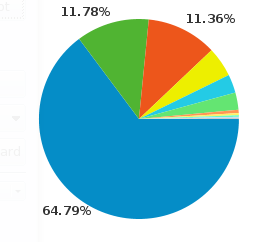
Internet Explorer’s dominant market share eroding
Remember when Internet Explorer ruled the Web, to the tune of about 98% of the browser market share? Those were happy days for Internet Explorer. Until Firefox rose from the ashes of Netscape. Internet Explorer’s market share has been sliding ever since, and I think it got worse when Safari and then Google’s Chrome joined [...]
Windows 7 Sins now in 9 languages!
Our campaign for computer user freedom, Windows 7 Sins, now has 6 language translations available with several more on the way. The translation effort, coordinated by FSF campaigns staff working with volunteer translators, has been gathering pace over the last few months. All the work has been done using free software tools with our collaboration [...]
FTC’s exploring privacy roundtable webcast
“The Federal Trade Commission will host a series of day-long public roundtable discussions to explore the privacy challenges posed by the vast array of 21st century technology and business practices that collect and use consumer data. Such practices include social networking, cloud computing, online behavioral advertising, mobile marketing, and the collection and use of information [...]
The Evil That Apple Does
Apple’s new iPad is going to be a laptop supplement for some early-adopters, a laptop replacement for others, and a laptop instead-of for still other users, including some surprising late-adopters. In other words, it’s going to be the computer of choice for a number of us, perhaps millions of us, perhaps, if the iPhone is [...]
The Role of Privacy by Design in Protecting Consumer Privacy
1) What is Privacy by Design? CDT has submitted comments to the Federal Trade Commission for the second in a series of public roundtable discussions the agency is sponsoring exploring the privacy challenges posed by 21st-century technology and business practices that involve the collection and use of consumer data. CDT views these roundtable sessions as [...]


Subscribe by email